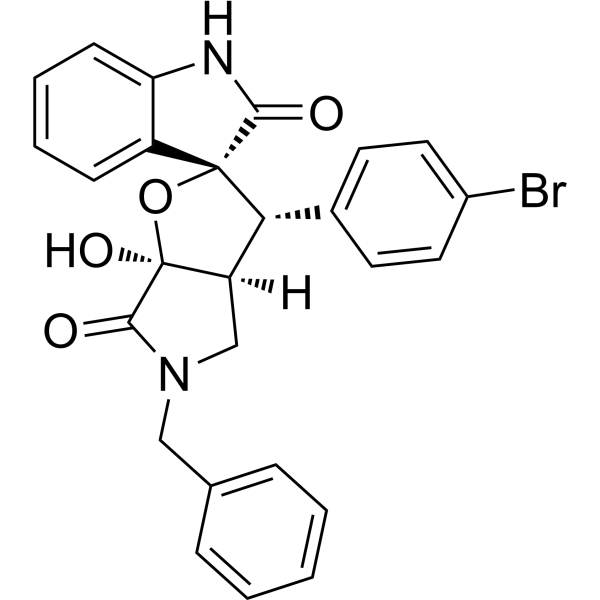
SMYD3
SMYD3 is a SET and MYND domain-containing lysine methyltransferase that catalyzes the methylation of histone and non-histone substrates[1][2]. Mechanistically, SMYD3 coordinates transcriptional regulation by forming complexes with proteins such as SMAD3 and RACK1, thereby promoting target gene expression involved in cell proliferation and migration[3][4][5]. In disease models, SMYD3 overexpression is associated with enhanced epithelial-mesenchymal transition (EMT), tumor invasion, and metastasis in breast, colorectal, and liver cancers[3][4][5][6]. Compared with related isoforms, including SMYD2 and SMYD5, SMYD3 demonstrates distinct substrate specificity and structural features, such as a TPR-containing C-terminal domain that forms a narrow substrate-binding pocket critical for enzymatic activity[7][2]. Structural studies also indicate that the DNA-binding MYND domain further modulates its catalytic function, enhancing histone methylation[2]. For experimental applications, pharmacological inhibitors such as BCI121 effectively block SMYD3-mediated chromatin association and reduce malignant phenotypes in cancer cell lines and zebrafish xenograft models[3][5]. Additionally, SMYD3 influences skeletal and cardiac muscle differentiation by targeting myogenic transcription factors, highlighting its utility in developmental and stem cell research[8][9]. These combined functional and structural insights establish SMYD3 as a distinct epigenetic regulator with both oncogenic and developmental relevance[1][2].
References:
- [1]. Fenizia C, et al. SMYD3 promotes the epithelial-mesenchymal transition in breast cancer. Nucleic Acids Res. 2019 Feb 20;47(3):1278-1293. [Content Brief]
- [2]. Bai X, et al. SMYD3 synergises with RACK1 to promote colorectal cancer lung metastasis by recruiting SMAD3. Cell Commun Signal. 2026 Feb 3;24(1):156. [Content Brief]
- [3]. Bottino C, et al. SMYD3: An Oncogenic Driver Targeting Epigenetic Regulation and Signaling Pathways. Cancers (Basel). 2020 Jan 6;12(1):142. [Content Brief]
- [4]. Yang Y, et al. SMYD3 associates with the NuRD (MTA1/2) complex to regulate transcription and promote proliferation and invasiveness in hepatocellular carcinoma cells. BMC Biol. 2022 Dec 27;20(1):294. [Content Brief]
- [5]. Foreman KW, et al. Structural and functional profiling of the human histone methyltransferase SMYD3. PLoS One. 2011;6(7):e22290. [Content Brief]
- [6]. Cock-Rada AM, et al. SMYD3 promotes cancer invasion by epigenetic upregulation of the metalloproteinase MMP-9. Cancer Res. 2012 Feb 1;72(3):810-20. [Content Brief]
- [7]. Huang Y, et al. The adjuvant treatment role of ω-3 fatty acids by regulating gut microbiota positively in the acne vulgaris. J Dermatolog Treat. 2024 Dec;35(1):2299107. [Content Brief]
- [8]. Codato R, et al. The SMYD3 methyltransferase promotes myogenesis by activating the myogenin regulatory network. Sci Rep. 2019 Nov 21;9(1):17298. [Content Brief]
- [9]. Xu S, et al. Structural and biochemical studies of human lysine methyltransferase Smyd3 reveal the important functional roles of its post-SET and TPR domains and the regulation of its activity by DNA binding. Nucleic Acids Res. 2011 May;39(10):4438-49. [Content Brief]
All Product Categories
-
SMYD3 Related Products (9)
Related Products (9)

-
MS4322
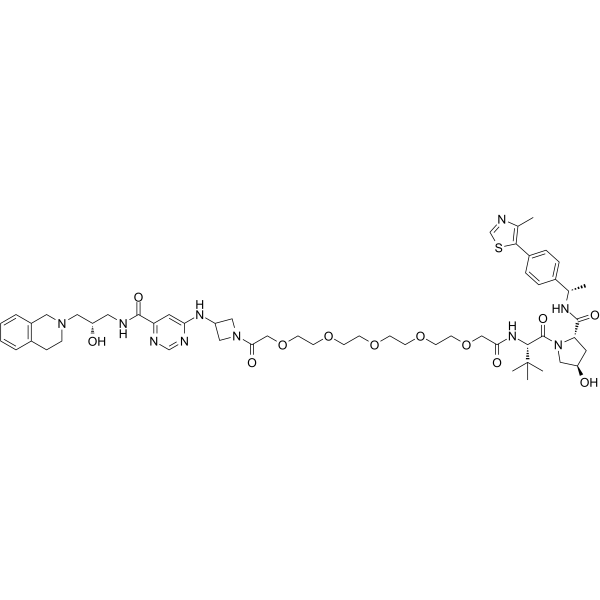 0 ImagesSynonyms: YS43-22MS4322 (YS43-22) is a specific PRMT5 PROTAC degrader. MS4322 reduces the PRMT5 protein level with a DC50 of 1.1 μM in MCF-7 cells. MS4322 inhibits the methyltransferase activity of PRMT5 with an IC50 of 18 nM. MS4322 promotes ubiquitination and degradation of PRMT5. MS4322 can be used for the research of breast cancer, lung cancer, and hepatocellular cancer. (Pink: PRMT5 ligand (HY-173092); Blue: E3 ligase ligand HY-112078); Black: linker (HY-124780); E3+linker (HY-173093 )).
-
EM127
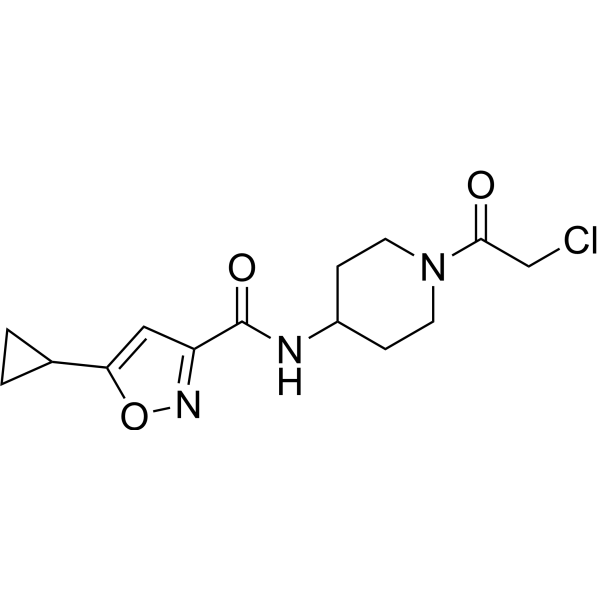 0 ImagesEM127 (compound 11c) is a SMYD3 covalent inhibitor with high selectivity, high affinity (KD=13 μM) and site-specificity. EM127 effectively inhibits ERK1/2 phosphorylation and reduces transcriptional regulation of SMYD3 target genes. EM127 effectively and prolongedly impairs methyltransferase activity. EM127 can be used in cancer research, particularly in SMYD3 positive tumours.
-
MS4322 (isomer)
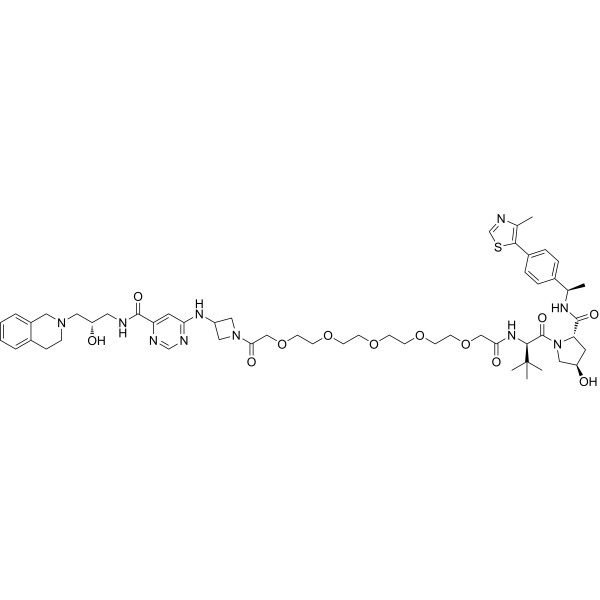 0 ImagesSynonyms: YS43-22 (isomer)MS4322 (YS43-22) isomer is an isomer of MS4322. MS4322 is a specific PRMT5 PROTAC degrader. MS4322 reduces the PRMT5 protein level with a DC50 of 1.1 μM in MCF-7 cells. MS4322 inhibits the methyltransferase activity of PRMT5 with an IC50 of 18 nM. MS4322 promotes ubiquitination and degradation of PRMT5. MS4322 can be used for the research of breast cancer, lung cancer, and hepatocellular cancer.